
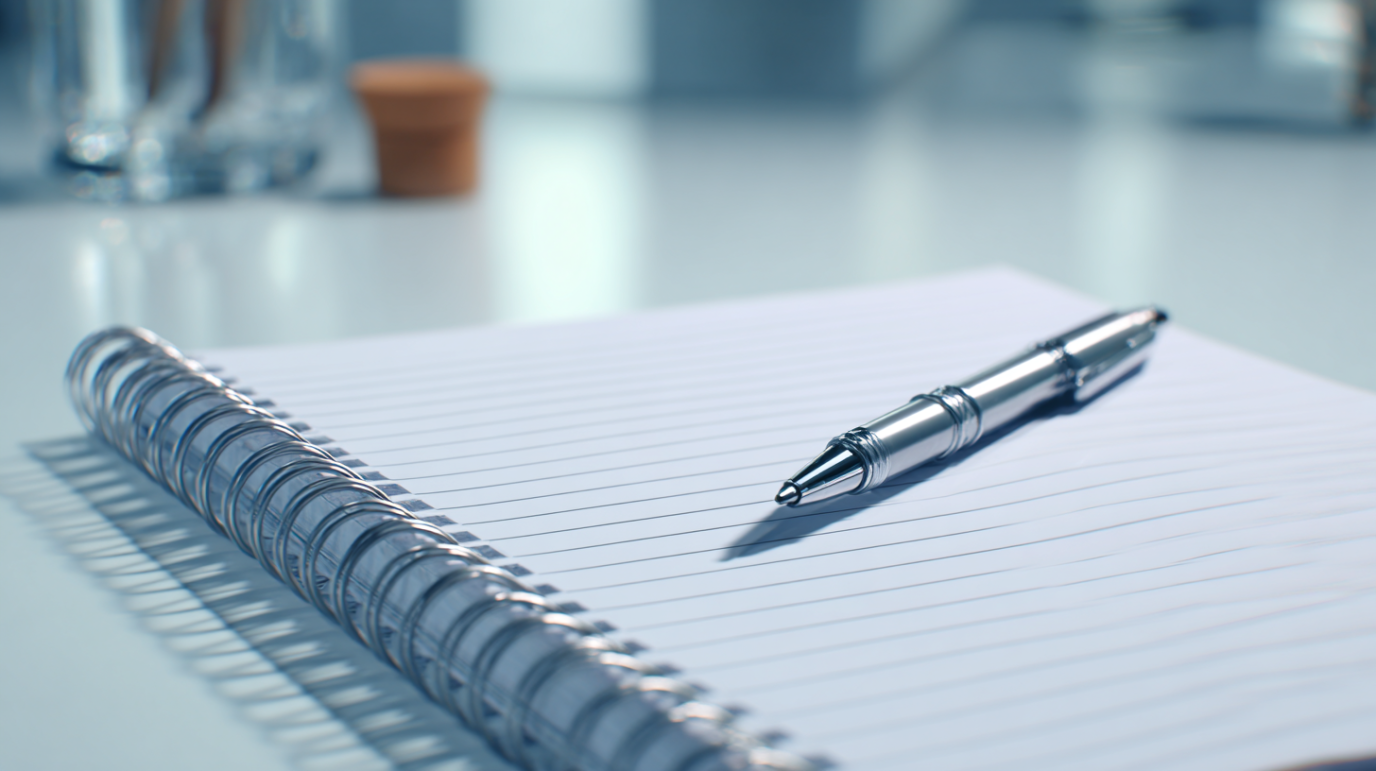
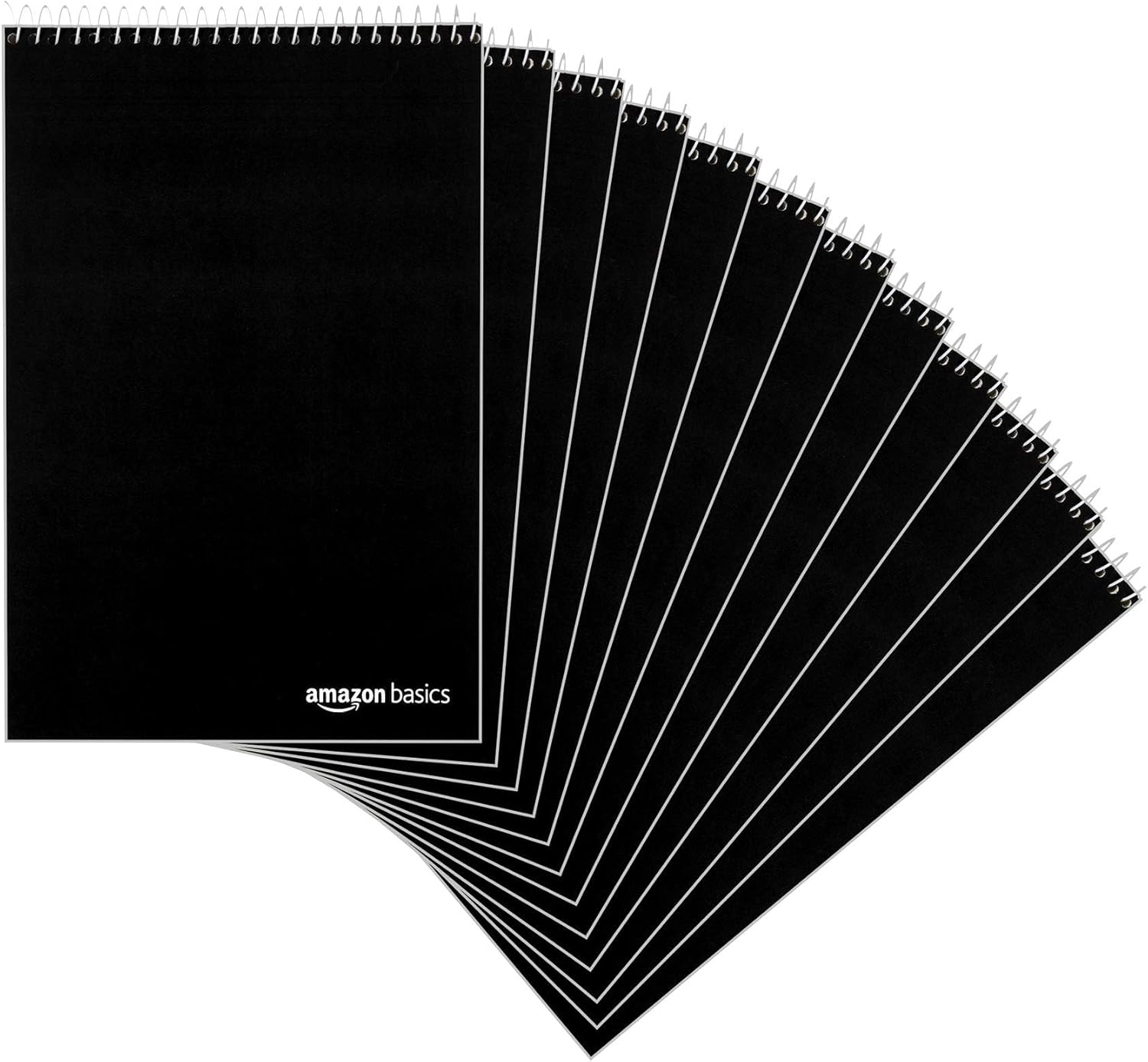
Amazon Basics Steno Books, Gregg Rule, Green Paper, 80 Sheets, 6″ x 9″, 12-Pack
- Steno book (12-pack) with 80 sheets of paper per book; ideal for everyday shopping lists, meeting notes, and more
- Gregg rule consists of 11/32-inch spacing; blue horizontal lines and a single red vertical line down the center
- Snag-free top coil keeps all the pages neatly together and won’t catch on other papers, bags, or clothing
- Green tinted for a nice appearance and reduced eye strain; perforated sheets detach easily
- Measures 6 by 9 inches; backed by an Amazon Basics 1-year limited warranty
$18.99
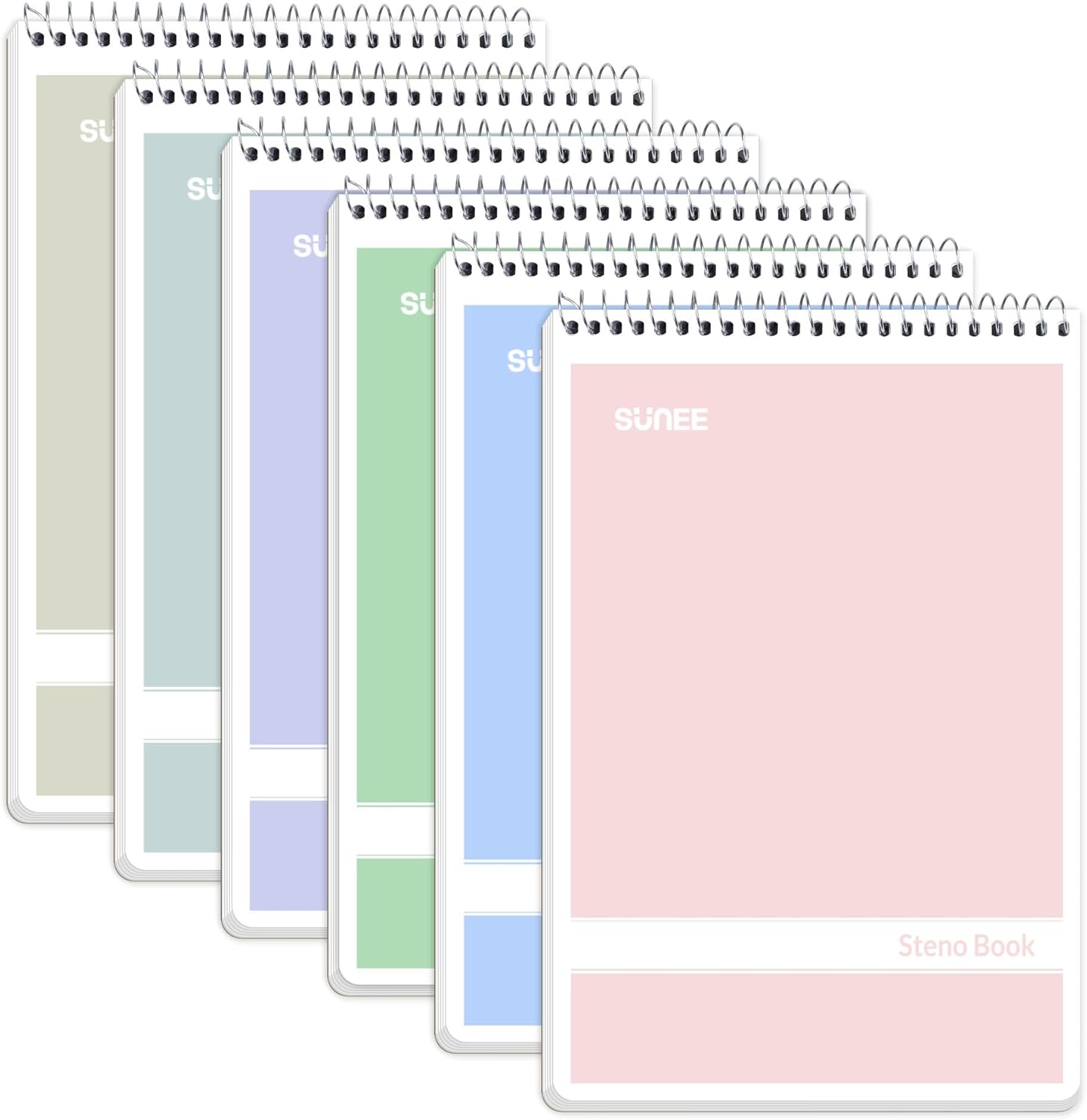
SUNEE Steno Pads 6×9 6 Pack, Gregg Rule, 60 Sheets, 6 Assorted Color Spiral Notebook 6×9, White Paper, Take Notes with Top Spiral Notebook, for School, University, College, Work, Office
- 6 Color: Get 6 different colors. Steno Pads provide versatility and convenience for different scenes and needs. Each color represents a unique purpose or topic. It is easy to distinguish and locate your notes and contents.
- 6 Pack: A set of 6 packs. Each per 60 sheets/120 pages. Cheap but good quality. Value for money. Whether you are a teacher, a student, or a worker, this set of spiral notebook 6×9 is the ideal choice.
- Gregg Rule: Gregg rules with 11/32-inch line spacing in the inner pages. Readable and Structured. Top Spiral Notebook is helpful for our life. Perfect for recording important points of meetings, organizing study notes, and writing down daily to-do lists.
- Top Spiral Notebook: Top spiral binding allows pages to lay completely flat. Spiral notepad ensures a smooth writing experience—no limits Whether you’re writing on the left or the right. Take full advantage of the entire page.
- Handy to Carry: Top bound notebook is designed for easy portability and on-the-go use. Fitting in your hands or bag. Easy to open and use. Never miss any of your thoughts, inspirations, sketches, and tasks.
$9.99
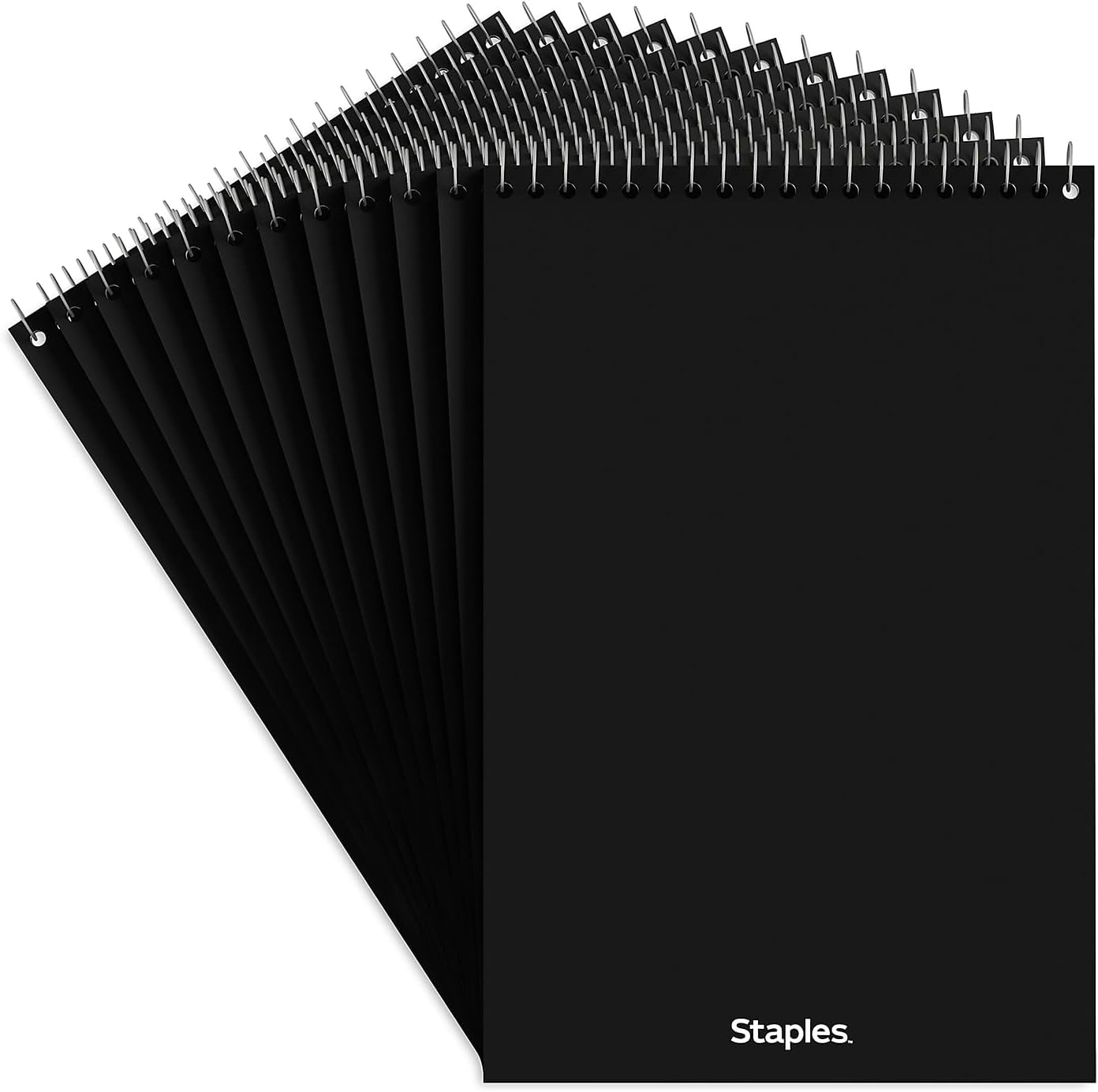
STAPLES Steno Notepads, 6 x 9 Inch, Gregg Ruled, Top Wire-Bound Notebooks, Cardstock Cover, 80-Sheets, 12-Pack, White Paper
- EVERYDAY WRITING SUPPLIES: Standard steno pads provide versatility, convenience, and portability no matter your needs – Accessible and ideal for note taking, daily to-do lists, or on-the-go use (Sold as 1 Each/Box, 12 total notepads)
- GREGG RULED, 6 x 9 SHEETS: Each notepad contains 80 sheets of Gregg ruled, white paper (11/32 inch line spacing), ensuring you will have plenty of space for your thoughts and writing projects
- 12-PACK STENO NOTEPADS: No matter if you are a professional, teacher, or student, our bulk pack of writing pads helps keep you stocked and ready
- TOP SPIRAL-BOUND DESIGN: Allowing pages to lay completely flat, our top spiral notepads will ensure a smooth writing experience with each use and offer ambidextrous writing so you never miss any of your thoughts, tasks, inspirations, sketches, and more
- WE ARE STAPLES: The line between work and life is blurring. We have solutions to keep your teams productive, connected and inspired – Whether you know exactly what you need, or you’re looking for tools and inspiration to hit goals, Staples is here for you!
$26.89
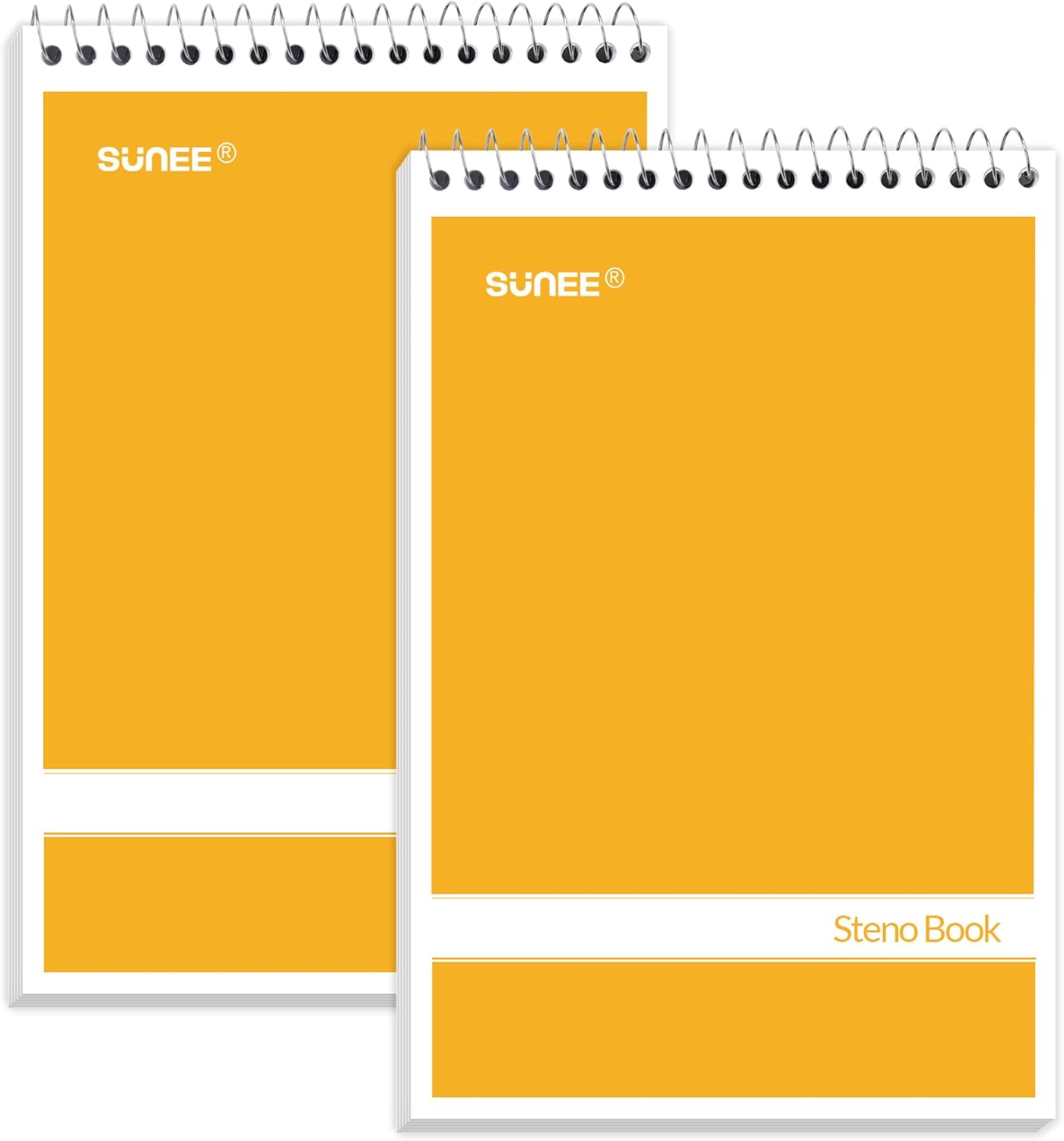
SUNEE 2 Pack Steno Pads 6×9, Gregg Rule, 60 Sheets, Spiral Notebook 6×9, White Paper, Take Notes with Top Spiral Notebook, for School, University, College, Work, Office, Yellow
- 2-Pack Value Set: Get two durable spiral notebooks, each with 60 sheets (120 pages). A cost-effective option that combines quality and affordability.
- Compact and Lightweight: With a 6×9 inch size, these notebooks fit effortlessly into your bag or backpack, making them ideal for on-the-go note-taking and organization.
- Top-Bound Spiral Design: The convenient top spiral layout provides a flat writing surface, ensuring comfortable use for both left-handed and right-handed writers.
- Readable Gregg Rule: Features 11/32-inch line spacing for clean and organized notes, perfect for meetings, brainstorming, or studying efficiently.
- Versatile and Multi-Purpose: Perfect for all your needs, whether it’s shopping lists, to-do lists, meeting notes, or study plans. A reliable choice for students, teachers, and professionals alike.
$5.99
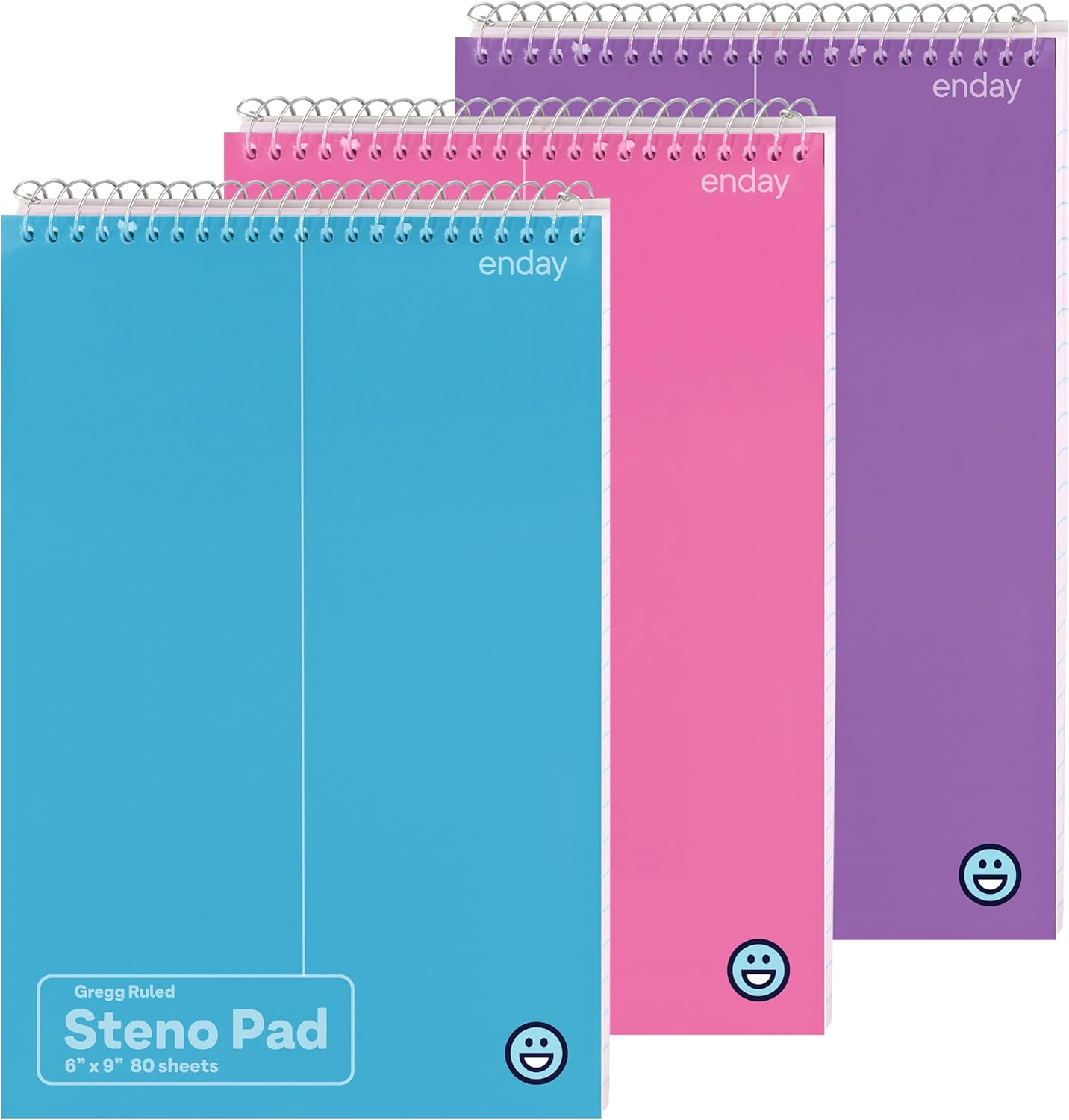
Enday Steno Pads Spiral 6 x 9 inches, Gregg Rule White Paper, 80 Sheets Steno Notebook for writing in Pink, Purple, Green, Blue, Red, Grey, Color May Vary (3 Pack)
- ✓DESCRIPTION – The steno pads’ smooth, premium paper allows notes to glide across the page extra-strong backs provide firm writing support. A no-snag coil resists catching on papers or clothing perforated sheets detach easily and strong cardboard backing.
- ✓QUALITY – The steno pads are made with high-quality paper and ink bleed resistant. The steno book paper handles mechanical pencils, gel pens, ink pens, and highlighters. The steno book 6 colors cover code your project or subject matter so you can easily identify your steno pad by cover.
- ✓SPECS – The steno pad’s classic flip-top format long preferred by stenographers and reporters gives quick access to notes and lists. The 5/16 spacing between lines easily to write. The steno book double-sided paper, 80 Sheets, redline, Gregg ruled and white pages.
- ✓DESIGN – The steno pads 6 x 9 compact size fits easily in a backpack, briefcase, purse, or notebook. The steno book sturdy writing surface, smooth edge, ink bleed resistance, and a spiral hole big enough to hold a pen. The steno book is lightweight and compact.
- ✓WE ALWAYS MAKE THE GRADE – Enday brings you the joy of learning. Our focus is giving you school supplies in a selection of diverse colors so that you can coordinate your school supplies to get the fun or chic look you desire. It brings color and life to the classroom. Enday is the one thing students and teachers agree on. We won’t let you down with our superior quality and top customer support.
$9.99
From stenographer’s tool to modern productivity powerhouse – discovering the perfect steno pad for every need
When I first encountered a steno pad fifteen years ago during my journalism internship, I honestly thought it was some antiquated relic from the Mad Men era. The reporter sitting next to me was furiously scribbling in what looked like a miniature spiral notebook with a mysterious line running straight down the middle of each page. I remember thinking, “Why not just use a regular notebook like everyone else?”
Fast forward to today, and I can’t imagine my professional life without these ingenious little books. What started as curiosity has evolved into a genuine obsession with finding the perfect steno pad for every situation. Whether I’m conducting interviews, brainstorming creative projects, or simply jotting down grocery lists, these compact powerhouses have become an indispensable part of my daily toolkit.
What Exactly is a Steno Pad Used For?
Let me paint you a picture of my typical Tuesday morning. I’m sitting in a conference room with six other people, laptops clicking away, tablets glowing, and smartphones occasionally buzzing with notifications. Meanwhile, I’m quietly taking notes in my trusty steno pad, and here’s what I’ve discovered: I’m often the only one who can quickly reference what was said twenty minutes ago without scrolling through screens or dealing with dead batteries.
Steno pads serve multiple purposes that extend far beyond their original stenographic roots. Originally designed for court reporters and secretaries who needed to capture rapid dictation using shorthand symbols, these notebooks have evolved into versatile tools for anyone who values efficient note-taking.
In my experience, steno pads excel in several key areas. First, they’re perfect for interviews and meetings where you need to capture both questions and answers, or different speakers’ contributions. The vertical line down the middle creates natural columns that help organize information as it flows. I use the left side for my own thoughts and follow-up questions, while the right side captures the actual responses or key points being discussed.
Second, they’re brilliant for project planning and brainstorming sessions. I can divide my thoughts between “problems” and “solutions,” or “immediate tasks” and “long-term goals.” The format naturally encourages structured thinking while remaining flexible enough to accommodate the chaotic nature of creative processes.
Third, steno pads have become my go-to tool for daily planning and task management. Unlike digital alternatives that can become overwhelming with notifications and apps, a steno pad provides distraction-free focus that helps me prioritize and organize my day without the temptation to check email or social media.
Understanding the Standard Dimensions and Why Size Matters
After years of experimenting with different notebooks and planners, I’ve come to appreciate why standard steno pad dimensions are so thoughtfully designed. Most traditional steno pads measure 6 inches wide by 9 inches tall, though you’ll also find common variations like 6″ x 8″ and occasionally smaller pocket-sized versions.
This specific sizing isn’t arbitrary – it represents decades of refinement based on practical use. The width accommodates comfortable writing while remaining narrow enough to hold easily in one hand. The height provides sufficient writing space without becoming unwieldy during meetings or interviews where discretion might be important.
I remember struggling with full-sized legal pads during my early career. They were constantly flopping over, taking up too much desk space, and drawing attention during meetings where I preferred to blend into the background. The compact nature of steno pads solved all these problems while actually providing more usable writing space due to their efficient design.
The proportions also work brilliantly for different writing styles and pen preferences. Whether you’re using a fine-tip pen for dense note-taking or a broader marker for quick sketches and diagrams, the page size accommodates various approaches without feeling cramped or excessive.
The Mystery of the Vertical Line: More Than Just Decoration
That distinctive vertical line running down the center of each page isn’t just a design quirk – it’s pure genius. When I first started using steno pads regularly, I thought the line was limiting, almost like being forced to write within predetermined boundaries. How wrong I was.
The vertical line serves multiple organizational functions that become more valuable the more you use them. In traditional stenography, the line separated shorthand symbols from longhand notes, allowing stenographers to maintain incredible speed while preserving clarity. Today, this same principle applies to countless modern applications.
During interviews, I use the left column for my prepared questions and the right for responses. This creates a natural dialogue format that makes reviewing notes later much more intuitive. For project planning, the left side might contain current challenges while the right lists potential solutions. When taking meeting notes, I often dedicate one side to action items and the other to general discussion points.
The line also helps with information density. Instead of having one continuous stream of notes that can become overwhelming to review, the columnar format naturally breaks information into digestible chunks. This makes scanning for specific details much faster and reduces the cognitive load when trying to make sense of complex meetings or interviews.
Steno Pads vs. Regular Notebooks: Why the Difference Matters
Over the years, I’ve tried virtually every type of notebook imaginable: moleskines, composition books, legal pads, spiral notebooks, bound journals, and countless digital alternatives. Each has its merits, but steno pads offer unique advantages that set them apart from the competition.
The most obvious difference is the format. Regular notebooks typically feature either lined, graph, or blank pages without any organizational structure. While this provides maximum flexibility, it often leads to inconsistent note-taking patterns and difficulty when trying to review information later. The structured format of steno pads encourages better organization from the start.
Spiral binding is another crucial differentiator. Unlike bound notebooks that require you to write around the binding or fold pages awkwardly, steno pads lay completely flat and can be folded back on themselves without damaging the binding. This makes them ideal for standing while taking notes or working in cramped spaces like airplane seats or crowded conferences.
The paper quality in good steno pads also tends to be superior to many regular notebooks. The paper needs to handle rapid writing without bleeding or tearing, so manufacturers typically use heavier stock that feels more substantial under your pen. This improved paper quality makes the writing experience more pleasant and professional.
Size is perhaps the most practical differentiator. Regular notebooks often err toward being either too large (like legal pads) or too small (like pocket notebooks). Steno pads hit the sweet spot of being large enough for substantial note-taking while remaining portable and unobtrusive in professional settings.
Where to Buy Steno Pads in Bulk: A Practical Guide
Nothing frustrated me more in my early steno pad days than running out at crucial moments or paying premium prices for single pads at office supply stores. Over time, I’ve developed a system for buying steno pads in bulk that ensures I’m never without one while keeping costs reasonable.
Traditional office supply retailers like Staples, Office Depot, and OfficeMax typically offer decent bulk pricing, especially during back-to-school seasons. However, I’ve found that warehouse stores like Costco and Sam’s Club often provide better value for larger quantities. They might not always have them in stock, but when they do, the per-unit cost is significantly lower.
Online retailers have become my preferred source for bulk purchases. The selection is broader, pricing is competitive, and delivery eliminates the hassle of transporting large quantities. I typically order a dozen pads at a time, which provides enough supply for several months while qualifying for better pricing tiers.
For businesses or organizations with higher volume needs, contacting manufacturers directly can yield significant savings. Many companies that produce steno pads offer wholesale pricing for orders above certain minimums. This approach also allows for customization options that aren’t available through retail channels.
I’ve also discovered that buying different brands in bulk allows me to test various options without committing to one specific type. This experimentation has helped me identify preferences for different situations – some brands work better for quick meeting notes while others excel for detailed interview transcription.
Perfect for Meeting Notes: Why Steno Pads Excel in Professional Settings
After attending thousands of meetings throughout my career, I can confidently say that steno pads are superior to digital alternatives for most meeting situations. While laptops and tablets certainly have their place, the humble steno pad offers advantages that become more apparent the more you use it.
First, there’s the attention factor. When you open a laptop during a meeting, there’s always the subtle implication that you might be checking email, browsing the web, or working on other tasks. A steno pad signals focused engagement and respect for the discussion at hand. I’ve noticed that meeting participants often share more openly when they see handwritten notes rather than digital devices.
The speed of capture is another crucial advantage. With practice, handwriting can match or exceed typing speed for short bursts, and you can seamlessly switch between text, diagrams, arrows, stars, and other visual elements that help capture context and emphasis. Try drawing a quick flowchart on a laptop during a fast-paced brainstorming session – it’s awkward and disruptive.
The columnar format of steno pads naturally organizes meeting information in ways that work well for follow-up actions. I typically use one column for general notes and the other for action items, deadlines, or questions that arise during the discussion. This real-time organization saves significant time when preparing meeting summaries or follow-up communications.
Battery life is never a concern with steno pads. I’ve been in too many important meetings where someone’s device died at a crucial moment, creating awkward delays and potentially missing important information. A pen and paper remain reliably low-tech in the best possible way.
Page Count Considerations: Finding the Right Capacity
The number of pages in a typical steno pad varies by manufacturer and intended use, but most standard pads contain between 80 and 120 pages. This might seem modest compared to thick journals or composition books, but the efficient use of space in steno pads means these pages go much further than you might expect.
I’ve tracked my usage patterns over several years and found that an 80-page steno pad typically lasts me about three weeks with moderate daily use. This includes meeting notes, daily planning, project brainstorming, and various personal lists. The key factor is that the columnar format allows for denser information storage without creating cluttered, unreadable pages.
For people who take extensive notes or use their steno pad as a primary planning tool, larger page counts make sense. However, I’ve found that pads with more than 120 pages can become bulky and lose some of the portability advantages that make steno pads so appealing in the first place.
The sweet spot for me is around 100 pages. This provides sufficient capacity for most projects or time periods while maintaining the slim profile that makes steno pads easy to carry and handle. It’s also worth considering that completely filling a steno pad provides a satisfying sense of accomplishment and natural closure that can be motivating for ongoing projects.
Brand Comparison: Finding Your Perfect Match
After testing dozens of different steno pad brands over the years, I’ve developed strong preferences based on paper quality, binding durability, and overall user experience. While brand loyalty shouldn’t override practical considerations, certain manufacturers consistently deliver superior products.
Ampad has become my personal gold standard for everyday use. Their paper quality strikes an excellent balance between weight and smoothness, handling various pen types without bleeding or feathering. The spiral binding is robust enough to withstand daily use while remaining flexible enough for comfortable handling. The perforated pages are cleanly designed and tear evenly when needed.
Gregg, as the original creator of many stenographic systems, produces pads with excellent historical credentials and consistent quality. Their paper tends to be slightly heavier, which some people prefer for fountain pen use or when writing with significant pressure. The ruling is precise and the vertical line is well-positioned for optimal space division.
For budget-conscious bulk purchases, generic or store brands often provide acceptable quality at significant savings. While they might not match the paper quality or binding durability of premium brands, they’re perfectly adequate for temporary projects or situations where cost is the primary consideration.
Specialty brands like Rhodia and Clairefontaine offer premium options with exceptional paper quality, but at significantly higher prices. These might be worth considering for special projects or if you’re particularly sensitive to paper texture and ink performance.
Perforated Pages: The Unsung Hero Feature
One feature that doesn’t get enough attention in steno pad selection is page perforation. After years of frustrating attempts to cleanly tear pages from various notebooks, I’ve become a strong advocate for well-designed perforated pages.
Quality perforations allow you to cleanly remove pages when needed without damaging the remaining pad or leaving unsightly torn edges. This capability becomes invaluable when you need to share notes with colleagues, file important information separately, or simply want to start fresh on a new project while preserving previous work.
I use perforated pages regularly for creating action item lists that I can tear out and post on my computer monitor or share with team members. This bridges the gap between analog note-taking and digital workflow integration without requiring scanning or transcription.
The quality of perforations varies significantly between manufacturers and price points. Premium pads typically feature micro-perforations that tear cleanly and consistently, while budget options might have larger perforations that can lead to ragged edges or premature tearing. Testing a single pad before bulk purchasing can help avoid disappointment with perforation quality.
Shorthand Writing: Honoring the Original Purpose
While most modern steno pad users aren’t practicing traditional shorthand, understanding this original purpose enhances appreciation for the design elements that make these pads so effective for contemporary use.
Traditional shorthand systems like Gregg, Pitman, or Teeline allowed skilled practitioners to capture speech at conversational speed by using simplified symbols and abbreviations. The vertical line in steno pads separated these shorthand symbols from occasional longhand words or clarifications, creating a dual-track system that maximized both speed and accuracy.
Even without formal shorthand training, many modern users develop personal abbreviation systems that capture the efficiency benefits of stenographic principles. I’ve evolved my own set of symbols and shortcuts for common words and phrases that appear frequently in my work. This personal shorthand system significantly increases my note-taking speed without sacrificing comprehension.
The discipline required for effective shorthand also translates to better general note-taking habits. Shorthand emphasizes capturing key concepts rather than verbatim transcription, which leads to more engaged listening and better retention of important information.
Material Quality: What Makes a Steno Pad Durable
The materials used in steno pad construction directly impact both user experience and longevity. After wearing through countless pads over the years, I’ve learned to identify quality markers that predict how well a pad will hold up to regular use.
Paper weight is perhaps the most important factor. Quality steno pads typically use paper in the 20-24 pound range, which provides sufficient substance to prevent bleeding while remaining light enough to keep the overall pad portable. Heavier paper might seem premium, but it can make the pad bulky and expensive without providing proportional benefits.
Paper texture affects writing comfort and ink performance. Slightly textured paper provides better grip for pens and pencils, reducing hand fatigue during extended writing sessions. However, too much texture can create an unpleasant writing experience and may cause some pens to skip or catch.
The binding quality determines how well the pad holds together through regular use. Look for wire spirals that are properly crimped and coated to prevent scratching or snagging on clothing or bags. The connection points where the wire enters the pad should be reinforced to prevent pages from tearing out prematurely.
Cover materials range from simple cardboard to laminated or plastic-coated options. While premium covers add cost, they significantly improve durability and weather resistance for pads that will see heavy use or travel frequently.
Color Options: More Than Just Aesthetics
While traditional steno pads were almost exclusively white or off-white, modern manufacturers offer various color options that serve both aesthetic and functional purposes. After experimenting with different colors over the years, I’ve found that color choice can actually impact productivity and organization in subtle but meaningful ways.
Different colored covers help with project organization when using multiple pads simultaneously. I typically use blue covers for client projects, green for personal planning, and traditional white for general meeting notes. This color coding system makes grabbing the right pad automatic and reduces the cognitive load of managing multiple information streams.
Colored pages can reduce eye strain during extended writing sessions, though this varies significantly between individuals. Some people find cream or ivory pages more comfortable than bright white, especially under fluorescent lighting. However, colored pages can make scanning or photocopying more difficult if document reproduction is important for your workflow.
The psychological impact of color shouldn’t be underestimated. Some people find that using a special colored pad for creative projects helps signal to their brain that it’s time for innovative thinking rather than routine note-taking. This might seem trivial, but small environmental cues can have surprisingly large impacts on productivity and creativity.
Sustainable Practices: Recycling and Environmental Considerations
As someone who goes through several steno pads per year, I’ve become increasingly conscious of the environmental impact of my paper consumption. Fortunately, there are several strategies for making steno pad usage more sustainable without sacrificing productivity.
Most steno pads are made from recyclable materials, but the spiral binding requires separation before recycling. I’ve developed a system for removing the wire binding when pads are finished, which allows the paper to be recycled with regular office paper. Some recycling facilities can handle the spiral binding separately as scrap metal.
Choosing pads made from recycled content or sustainable forestry sources reduces environmental impact. Many manufacturers now clearly label their environmental credentials, making it easier to make responsible choices without extensive research.
Digital scanning of completed pages before disposal allows for long-term storage without retaining physical documents. While this adds a step to the workflow, it enables the benefits of analog note-taking while reducing long-term storage requirements and enabling backup copies of important information.
Sharing or donating partially used pads can extend their useful life. I often have pads with only a few pages used for specific projects that can be valuable for students or colleagues who need temporary note-taking solutions.
Historical Perspective: From Stenographer to Modern Professional
Understanding the history of steno pads provides context for why their design has remained largely unchanged despite dramatic technological advances in other areas. The basic format was established in the early 20th century to support the growing stenographic profession, which was dominated by women who needed efficient tools for capturing rapid dictation.
The golden age of stenography roughly spanned from the 1920s through the 1970s, during which steno pads were ubiquitous in offices, courtrooms, and anywhere rapid transcription was needed. The specific dimensions and features we recognize today were refined during this period based on extensive real-world use by millions of professional stenographers.
The decline of formal stenography due to recording technology and digital alternatives might have spelled the end for steno pads, but instead, they found new life among journalists, consultants, students, and professionals who discovered that the efficient design principles that served stenographers also benefited modern knowledge workers.
Today’s steno pad renaissance reflects a broader trend toward analog tools that complement rather than compete with digital technology. Rather than being obsolete, steno pads have evolved into specialized tools that excel in specific situations where digital alternatives fall short.
Waterproof and Weather-Resistant Options
While traditional steno pads aren’t designed for harsh conditions, manufacturers have developed waterproof and weather-resistant versions for users who need reliable note-taking in challenging environments. As someone who’s had important notes destroyed by unexpected rain or spilled coffee, I’ve come to appreciate these specialized options.
Waterproof steno pads typically use synthetic paper or specially treated natural paper that repels water while maintaining a natural writing feel. The trade-offs usually include higher cost and slightly different ink compatibility, but for field work or outdoor use, these compromises are often worthwhile.
Weather-resistant covers provide protection for standard paper while maintaining cost-effectiveness for most users. These covers might be plastic-coated or made from synthetic materials that resist moisture, tearing, and general wear. They’re particularly valuable for pads that travel frequently or are used in industrial environments.
All-weather options extend beyond just water resistance to include tear resistance, temperature stability, and chemical resistance. While these specialized pads represent a small market segment, they demonstrate the adaptability of the basic steno pad concept to diverse professional requirements.
Ruling Styles: Adapting to Different Writing Needs
While the classic lined format dominates the steno pad market, alternative ruling styles cater to different writing preferences and professional requirements. After experimenting with various options, I’ve found that ruling style can significantly impact both writing comfort and information organization.
Graph or grid ruling works excellently for technical professionals who frequently sketch diagrams, charts, or architectural drawings alongside their notes. The grid provides natural alignment for both text and graphics while maintaining the organizational benefits of the central dividing line.
Blank pages offer maximum flexibility for creative professionals or anyone who integrates significant visual elements into their note-taking. However, the lack of guidelines can make it challenging to maintain consistent text alignment or column organization.
Dot grid ruling has gained popularity as a compromise between structure and flexibility. The dots provide subtle guidance for alignment without the visual weight of full lines, making them ideal for bullet journaling systems or mixed text-and-graphic note-taking.
Some manufacturers offer custom ruling options for bulk orders, allowing organizations to create pads specifically tailored to their workflow requirements. This might include specialized column widths, additional header spaces, or integrated calendar elements.
Business Customization: Building Brand Identity
For organizations that use steno pads regularly, customization with logos and branding can serve both practical and marketing purposes. Having worked with several companies that implemented custom steno pads, I’ve seen how this simple tool can contribute to professional image and team cohesion.
Custom covers with company logos create a professional appearance during client meetings and help reinforce brand identity in subtle but meaningful ways. Unlike digital devices that might display personal information or distracting notifications, custom steno pads maintain focus on the business relationship.
Internal customization can include department-specific layouts, project templates, or workflow integrations that improve productivity across teams. For example, consulting firms might include standardized sections for client information, project phases, or billing codes that streamline note-taking and project management processes.
The minimum order quantities for customization vary significantly between suppliers, but they’re often more accessible than expected. Many printing companies offer custom steno pad services as part of broader business stationary packages, making it feasible even for smaller organizations.
Quality control becomes crucial with custom orders, as you’re typically committing to larger quantities without the ability to test individual pads beforehand. Working with reputable suppliers and requesting samples before finalizing large orders helps ensure satisfaction with the final product.
Paper Weight Specifications: Technical Considerations
Understanding paper weight specifications helps predict how different steno pads will perform with various writing instruments and usage patterns. Paper weight is typically measured in pounds, referring to the weight of a ream (500 sheets) of paper cut to a standard size.
Most quality steno pads use paper in the 20-24 pound range, which provides good durability without excessive bulk. Lighter weights (16-18 pounds) can work for temporary use or budget applications but may show through or tear more easily with heavy writing pressure or frequent page turning.
Heavier papers (24+ pounds) offer premium feel and performance but increase cost and bulk proportionally. They’re particularly valuable for fountain pen users or anyone who writes with significant pressure, as they resist bleeding and provide a more substantial writing surface.
Opacity and brightness are related specifications that affect readability and professional appearance. Higher opacity prevents show-through from the reverse side of pages, while brightness affects contrast and eye strain. Premium papers typically score well in both categories, though at correspondingly higher prices.
The relationship between paper weight and binding strength becomes important for pads that will see heavy use. Heavier papers can stress spiral bindings more quickly, particularly if pages are turned frequently or the pad is carried in bags where it might be compressed or twisted.
Digital Integration: Bridging Analog and Digital Workflows
While steno pads are fundamentally analog tools, smart integration with digital workflows can amplify their effectiveness without sacrificing the benefits of handwritten notes. I’ve developed several strategies for bridging this gap that maintain the immediacy of analog note-taking while enabling digital storage and collaboration.
Smartphone scanning apps have revolutionized how I handle completed steno pad pages. Apps like Adobe Scan or Microsoft Office Lens can quickly capture pages with automatic edge detection and perspective correction, creating clean digital files that are easy to store, share, and search.
Cloud storage integration allows scanned pages to be automatically organized and backed up across devices. I typically scan completed projects before archiving physical pads, creating searchable digital records while maintaining the original analog workflow that makes steno pads so effective.
Hybrid planning systems combine analog steno pad planning with digital calendar and task management tools. I use my steno pad for daily planning and meeting notes, then transfer action items and deadlines to digital systems for tracking and collaboration. This approach leverages the thinking benefits of handwriting while ensuring nothing falls through the cracks.
OCR (Optical Character Recognition) technology can convert handwritten notes to editable text, though accuracy varies significantly based on handwriting legibility and app sophistication. While not perfect, OCR can be valuable for extracting specific information or creating searchable digital archives of important notes.
Organization Strategies: Maximizing Steno Pad Effectiveness
Over years of steno pad use, I’ve developed organization strategies that significantly enhance their effectiveness for both short-term productivity and long-term reference. These systems work regardless of brand or specific format, making them adaptable to different preferences and requirements.
Date and project headers on each page create natural organization points that make reviewing notes much easier. I typically include the date, meeting or project name, and key participants at the top of each session. This small investment of time pays significant dividends when trying to locate specific information weeks or months later.
Consistent symbol systems for different types of information help create visual scanning points throughout your notes. I use stars for action items, question marks for follow-up questions, and arrows for important deadlines. These symbols make it easy to quickly identify different types of information when reviewing pages.
Page numbering and index creation turn individual steno pads into reference documents rather than just temporary note-taking tools. For important projects or extended meetings, maintaining a simple index on the back cover helps locate specific topics or decisions quickly.
Color coding with different pen colors can add another organizational layer without requiring specialized supplies. I often use blue for general notes, red for urgent items, and green for personal thoughts or creative ideas. This system works within the constraints of typical office supplies while providing meaningful organization benefits.
Conclusion: Embracing the Timeless Efficiency of Steno Pads
After more than a decade of devoted steno pad use, I remain convinced that these humble tools offer unique advantages that haven’t been replicated by digital alternatives. While technology continues advancing at breakneck speed, the fundamental human benefits of handwriting, structured thinking, and distraction-free note-taking remain constant.
The perfect steno pad doesn’t exist because individual needs vary so dramatically based on profession, writing style, and personal preferences. However, understanding the key factors – size, paper quality, binding style, ruling options, and intended use – enables informed decisions that can significantly impact daily productivity and professional effectiveness.
Whether you’re a busy executive managing multiple projects, a student navigating complex coursework, a creative professional capturing inspiration, or anyone who values clear thinking and organized information, steno pads offer a tried-and-true solution that has stood the test of time.
The key is finding your personal sweet spot among the many available options and developing consistent systems that leverage the inherent strengths of this deceptively simple tool. Start with a basic pad from a reputable manufacturer, experiment with different organizational approaches, and gradually refine your selection criteria based on actual use rather than theoretical preferences.
In our increasingly digital world, the tactile satisfaction and cognitive benefits of quality analog tools become more valuable, not less. Steno pads represent the best of both worlds: time-tested efficiency that complements rather than competes with modern technology, creating workflows that are both productive and satisfying.
The next time you’re facing a complex project, preparing for an important meeting, or simply wanting to think more clearly about a challenging problem, consider reaching for a steno pad instead of opening another app. You might be surprised by how this simple tool can enhance your thinking, improve your organization, and connect you with the enduring power of putting pen to paper.